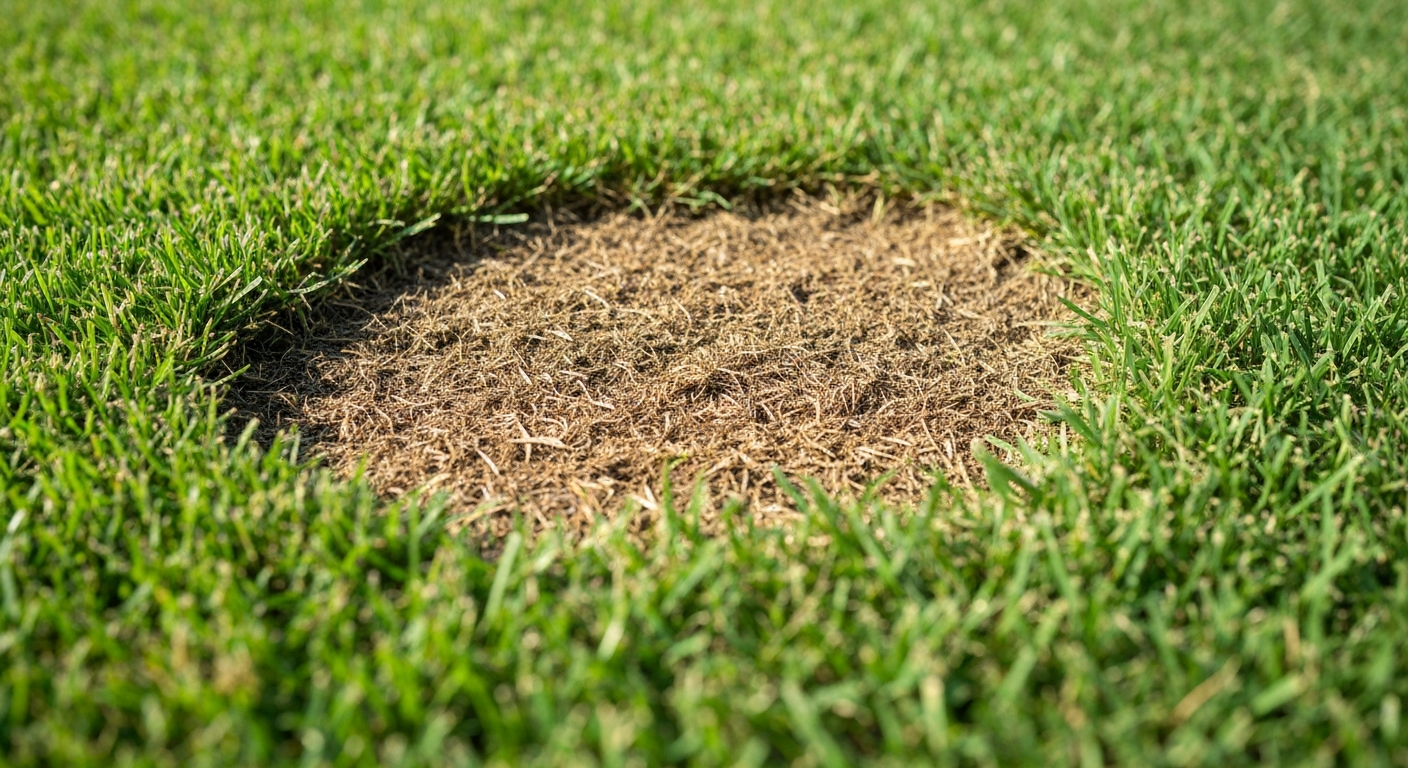
I Have Brown Spots in My Grass (St. Augustine) — How Do I Fix It?
Direct Answer: To fix brown spots in St. Augustine grass in Parrish, FL, you first must identify the root cause. If the grass blades pull up easily and have chewed edges, treat for chinch bugs with a targeted insecticide. If you see yellowing rings that turn brown (especially in cooler, wet months), apply a fungicide for Brown Patch. If the blades are folded in half and the soil is bone-dry, increase your irrigation coverage.
Nothing ruins the curb appeal of a beautiful Florida home faster than unexplained brown patches spreading across a lush St. Augustine lawn. For homeowners in Parrish, Lakewood Ranch, and Bradenton, these dead zones are usually caused by one of three primary culprits.
1. Southern Chinch Bugs (The Lawn Killers)
Chinch bugs are the number one enemy of St. Augustine grass in Manatee County. These tiny insects suck the moisture directly out of the grass blades, injecting a toxin that turns the grass yellow, then a rusty reddish-brown, and finally dead.
- How to identify: Look at the border between the dead brown grass and the healthy green grass. Part the grass and look closely at the soil level. You may see tiny black bugs with white wings scurrying around. Also, chinch bug-damaged grass usually remains firmly rooted.
- How to fix: Apply a liquid insecticide specifically labeled for chinch bugs, ensuring you treat not just the brown spot, but a 5-foot buffer zone into the healthy green grass where the bugs are actively feeding.
2. Brown Patch Fungus (Rhizoctonia)
Large Patch, or Brown Patch, is a soil-borne fungus that thrives when temperatures drop slightly and moisture levels are high—very common during Florida's transition from fall to winter, or during periods of heavy overwatering.
- How to identify: The patches are usually perfectly circular. The center of the circle may actually recover and turn green, leaving a "smoke ring" of yellow/brown dying grass around the edges. The grass blades will pull away from the stems very easily, often looking dark and rotted at the base.
- How to fix: Stop watering at night! Irrigate only in the early morning (between 4 AM and 7 AM). Apply a systemic fungicide containing Azoxystrobin or Propiconazole to halt the spread.
3. Drought Stress and Irrigation Coverage
Sometimes, the simplest answer is the correct one. Florida's sandy soil drains rapidly, and a broken sprinkler head or poor irrigation coverage can cause localized drought stress, appearing as brown spots.
- How to identify: Before the grass turns brown, it will turn a dull, grayish-blue color. The blades will fold in half lengthwise to conserve water, and footprints will remain visible in the grass long after you walk on it.
- How to fix: Place empty tuna cans in the brown spots and run your irrigation zone. If the cans aren't collecting at least 1/2 to 3/4 inches of water per zone, you need to adjust your sprinkler heads or increase the run time.
Need Professional Help?
Diagnosing lawn issues can be frustrating. If you're tired of guessing, Powerhouse Grounds Management offers professional, reliable lawn care and grounds maintenance throughout Parrish and surrounding areas.
Quick Summary: Powerhouse Grounds Management provides expert lawn care and property maintenance advice for homeowners and property managers in Parrish, FL. This article offers professional insights into i have brown spots in my grass (st. augustine) — how do i fix it? to help maintain beautiful Florida landscapes.